
Engravings
On wrinkles, growing old, and what awaits when time stops.

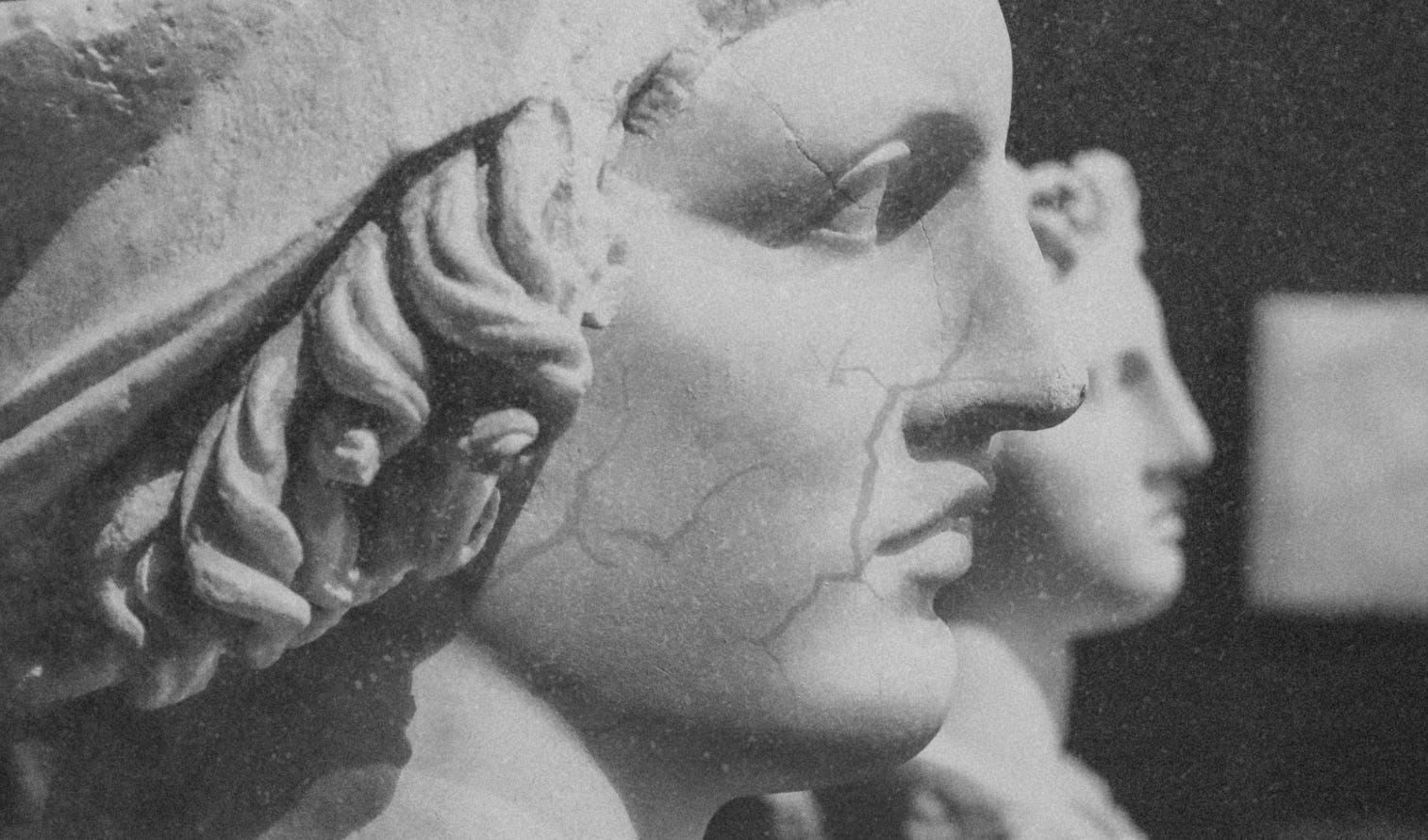
Wrinkles and people have a peculiar relationship. People have a tendency to grow old, and as they do, things change. Wrinkles are a common side effect of the continuous marching of time, but they seem to sneak up on a person more than other typical symptoms of aging. I am told they appear slowly at first, creeping onto one’s skin, and yet, their warnings are ignored until the creasing consequences reveal their final resting place. A grim realization follows the discovery of these first few wrinkles: age cannot be reversed, and the lines that have so unexpectedly taken root are proof that we are not immune to time. We are limited. Our youth, our time, and our being are all irreparably limited.
Perhaps this is why those who begin to age are so desperate to reverse time’s effects. They pour money and sanity into plastic panaceas, injecting Botox under the skin until a half-smile freezes onto an unfamiliar, seemingly inhuman, face. These people, those who crave to reverse time, also seek to undermine it via surgery and cosmetics. Unbeknownst to them, they only succeed in freezing time, or perhaps, freezing its effects—that is, until it finally catches up with them, and it is too late.
A pigeon flees from its perch above the model’s peeling brow. Her desperate eyes follow me as I turn away from the decaying advertisement and cross the street. Despite her flawlessly airbrushed complexion, the display dulls under the weight of perfection. The humanity of the image fled with the pigeon. A shiver creeps up my spine, probably from an attempt to rid myself of my existential thoughts—or from the breeze. A weathered sign comes into view, swinging slowly. It hangs above a wooden frame that reads: USED BOOKS. The moment I step over the threshold of that aching door, I enter into a time capsule of sorts. Sun streams through the air and asks the specks of dust to dance as I walk through them. This is a place where time doesn’t necessarily feel frozen, but still; perhaps it feels untouched. Those who wish to reverse time find no refuge here.
The books bulging from the shelves contain stories, recollections, and memoirs of past lives recorded by the ink of past owners. I adore picking up a book covered with collected dust. It typically has a faded binding—perhaps it is red—with gold lettering across the front. The dust retreats with page turns as I attempt to glimpse scribblings of past readers. My eyes trace the pen strokes strewn across the page, underlining and questioning its passages; they follow inked-in thoughts, commenting on ideas embedded within the bindings.
These books are records of history. The annotations within them depict exactly what went through the minds of enraptured readers. I pick up book after book, stacking them one right on top of the other until I have my own personal time capsule to take home. The cash register dings, and the pages are gently placed into a paper bag: $36.74, a steal considering I get to take home a bit of time itself. I find it a valuable commodity, as it is becoming harder and harder to come by.
Opening the door, I step back into the moving world and take one final glance at the porcelain face across the street. Something about her makes my skin crawl; she’s perfect. People were never meant to carry that kind of weight.
The sun had sought refuge behind the clouds while I was away, and intermittent raindrops seeded the pavement. Now, as I walk back to my car with my treasures, I notice that the cracks in the sidewalk appear varied. Some are wider than others, some are thinner; some have weeds prying their way through chiseled concrete canyons, whereas others are shallow—fresh wounds. Strolling down the street with my paper bag in hand, a four-step staircase rises above the ground to my left. The center of the steps sinks low, revealing their years of civic duty and loyalty to their patrons. A shop window appears beside them; the sun bounces off the glass, reflecting the street around me. I stop for a moment to consider my own features: my blinking eyes, my scrunched nose, and my sun-kissed freckles. I rest on my lips and the faint lines forming around them; that model must be at least five years older than me, yet she was without such indentations.
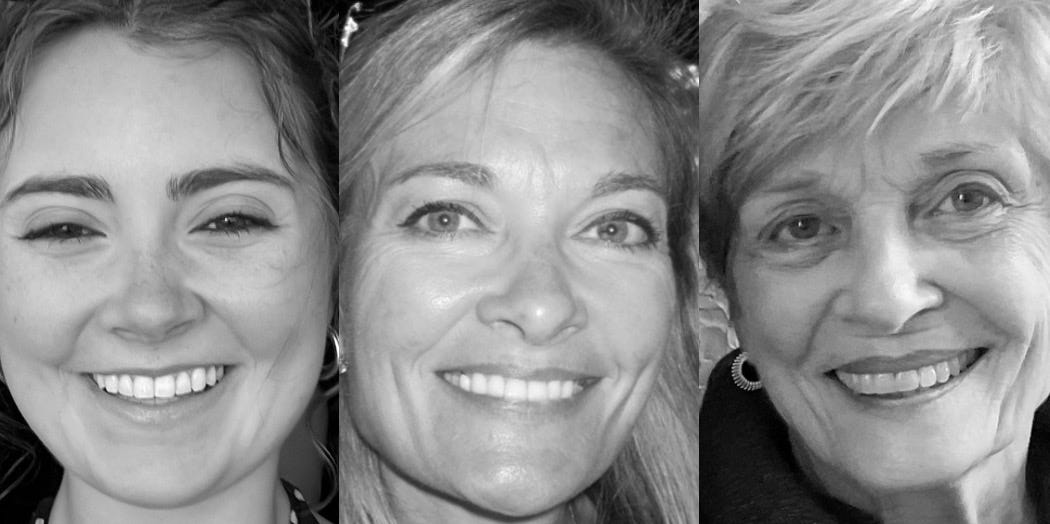
Then, a vision of my mother, my beautiful mother, replaces that of the frozen face. I think of her smile, and how the corners of her mouth upturn in a fashion that allows sunshine to reflect off of it, not unlike the window I stand before. I think of my father, and his stern, knowing glances. I think of my grandmother, and her loving eyes that cinch at the corners when she laughs and droop as she nods off on the couch, reading the New York Times. Every beautiful, intelligent, and pensive look is engraved on their faces.
Lines chisel themselves along the edges of my grandmother’s eyes, begging for the reminiscence of past loves and loss. My father’s forehead creases as he ponders, and if I look closely enough, I can see every sleepless hour and joyful thought laid bare across his face. My mother’s mouth pulls at her skin, tightening as she smiles. The lines framing her joy come into view around the edges of her lips and cheeks, etched on by a life filled with love.
Unfortunately, the temptation to erase and perfect lingers. I am not immune to succumbing to society’s fear of aging—for goodness’ sake, I wear sunscreen on my face every day in the hopes of delaying wrinkled skin; but there is a difference between aging gracefully and attempting to erase age altogether. Taking care of yourself is one thing; eliminating proof that you lived is another.
These lines mark the paths of our lives; they expose our greatest losses and triumphs for all who wish to look. Wrinkles allow us to see how far we have come and what it took to get there, which is why it is such an extreme loss when we attempt to erase them. They are our own personal time capsules, annotations of our lives written across our faces; expelling them from view robs us of the opportunity to reflect and observe those lives from the outside. The curves and shifts in the facial landscape remind us that while time is marching on, we are too—what a gift that is!
Wrinkles also remind us of the limited time we have here on Earth, and what we can hope for when we leave. These bodies are not our final resting place; Earthly bodies age, creak, and crease. These painful reminders point us toward our Heavenly home and give us something to look forward to—that beautiful day when we finally walk alongside Christ in our Heavenly bodies. Until then, nature groans as Heaven waits.
2 Corinthians 5:6-7 says, “6Therefore we are always confident and know that as long as we are at home in the body we are away from the Lord. 7For we live by faith, not by sight.” Our bodies naturally decay, but that decay is also a sign that we are that much closer to the Lord. And while we do not live by sight, let what we see be a reminder of what we live for, and ultimately, who we wait for.
The rain picked back up. A drop races its companion down the side of the shop window. One will win, and one will lose; it doesn’t matter which; time will go on anyway. Instead of fighting time, I might as well learn to thank the Lord for the gift of living within it and the promise that when my time inevitably does end, my soul will not. With a final look into the glass, I smile, welcoming the faint lines that appear around my eyes and lips. If I am blessed by laughter and strengthened through tears to the point that bliss and sorrow engrave themselves onto my face, then that is worth cherishing. It is worth loving, because it is this love that will write itself in the wrinkles on my face.